Part of How the LinkedIn Algorithm Decides What You’re an Expert In
Retention Value Index: Measure LinkedIn Saves per 1,000 Impressions
The Retention Value Index (RVI) is a metric I use to see which LinkedIn posts people keep. It counts saves per 1,000 impressions.
Why count saves
Likes and comments are public, so part of their job is to be seen. A save is private. Nobody sees it, and nobody saves a post to impress anyone. It means one thing: I want this later.
On my account, the posts with the highest RVI brought more followers, more inbound leads and more DMs than posts with three times the impressions but few saves.
How to read your score
| RVI | What it means |
|---|---|
| Below 1.0 | Consumed and forgotten |
| 1.0 to 3.0 | Genuinely useful |
| Above 3.0 | Reference material people come back to |
An example
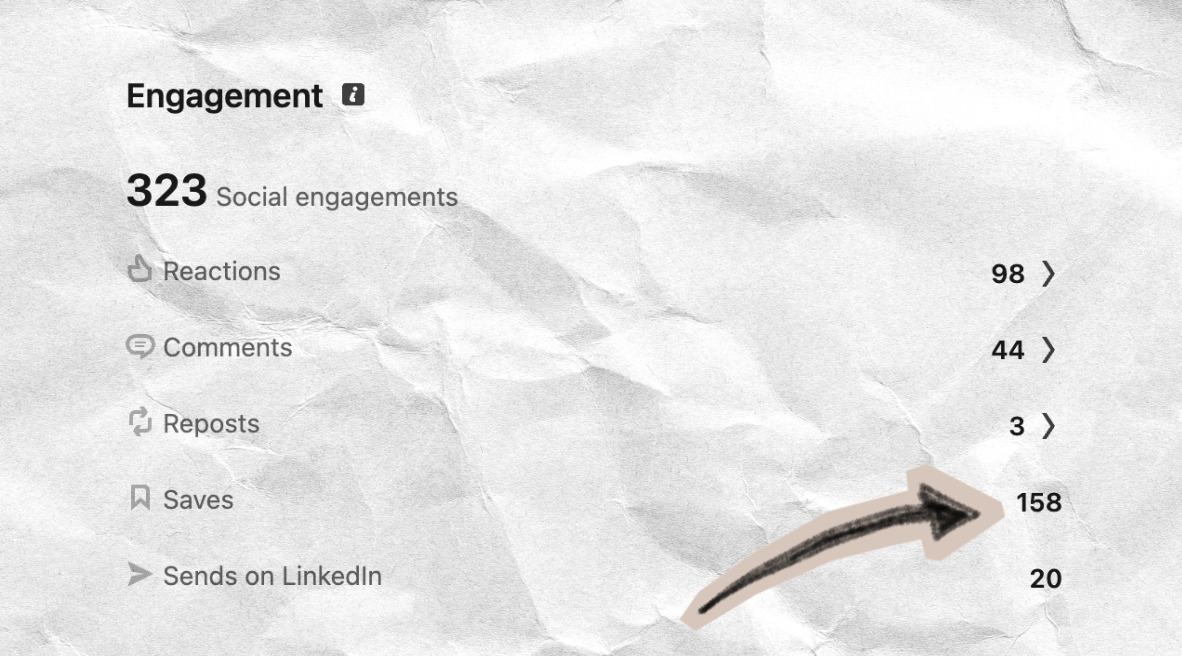
My post about hidden LinkedIn features got 98 reactions and 158 saves, an RVI of 10.9. A tribal-identity post ("things nobody says out loud") scored 3.0. My analytical frameworks almost all scored below 1.0.
Calculate yours
- Open the analytics for your last 10 posts.
- Note impressions and saves for each.
- Divide saves by impressions and multiply by 1,000.
- Sort the list. Your top three show what your audience wants to keep.
FAQ
What is a good save rate on LinkedIn? By RVI, below 1.0 save per 1,000 impressions means the post was consumed and forgotten, 1.0 to 3.0 means useful, and above 3.0 means reference material people come back to.
Where do I find saves on LinkedIn? Open the analytics for any of your posts. Saves are listed with reactions, comments, reposts and sends. Only you can see them.
This is one part of a longer guide on getting clients from LinkedIn with a small audience: your credibility file, your industry code, your opening words and your saves.Read the full guideFor consulting, software evaluations or speaking, reach out to kateryna@rigel.studio.